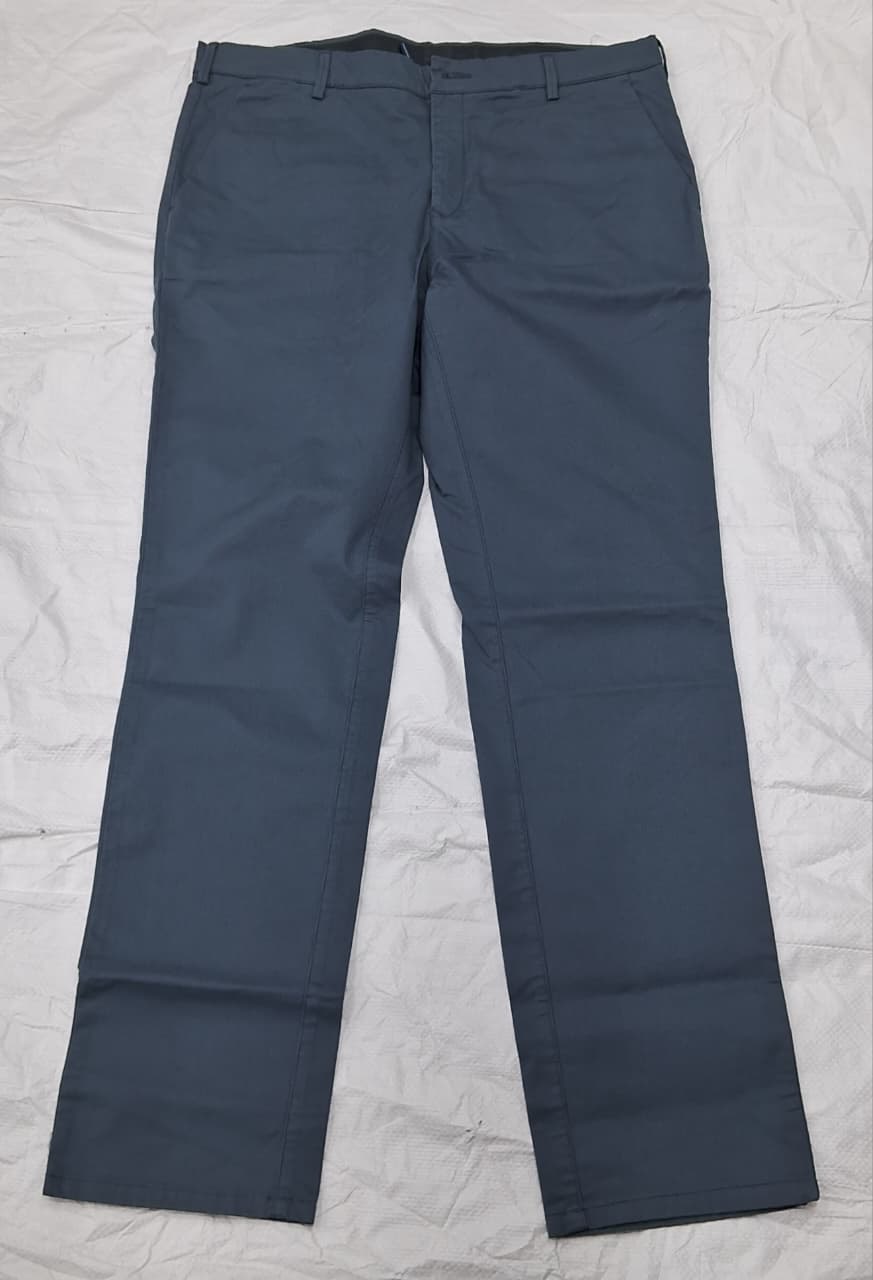
Proportion 01
Waist fit
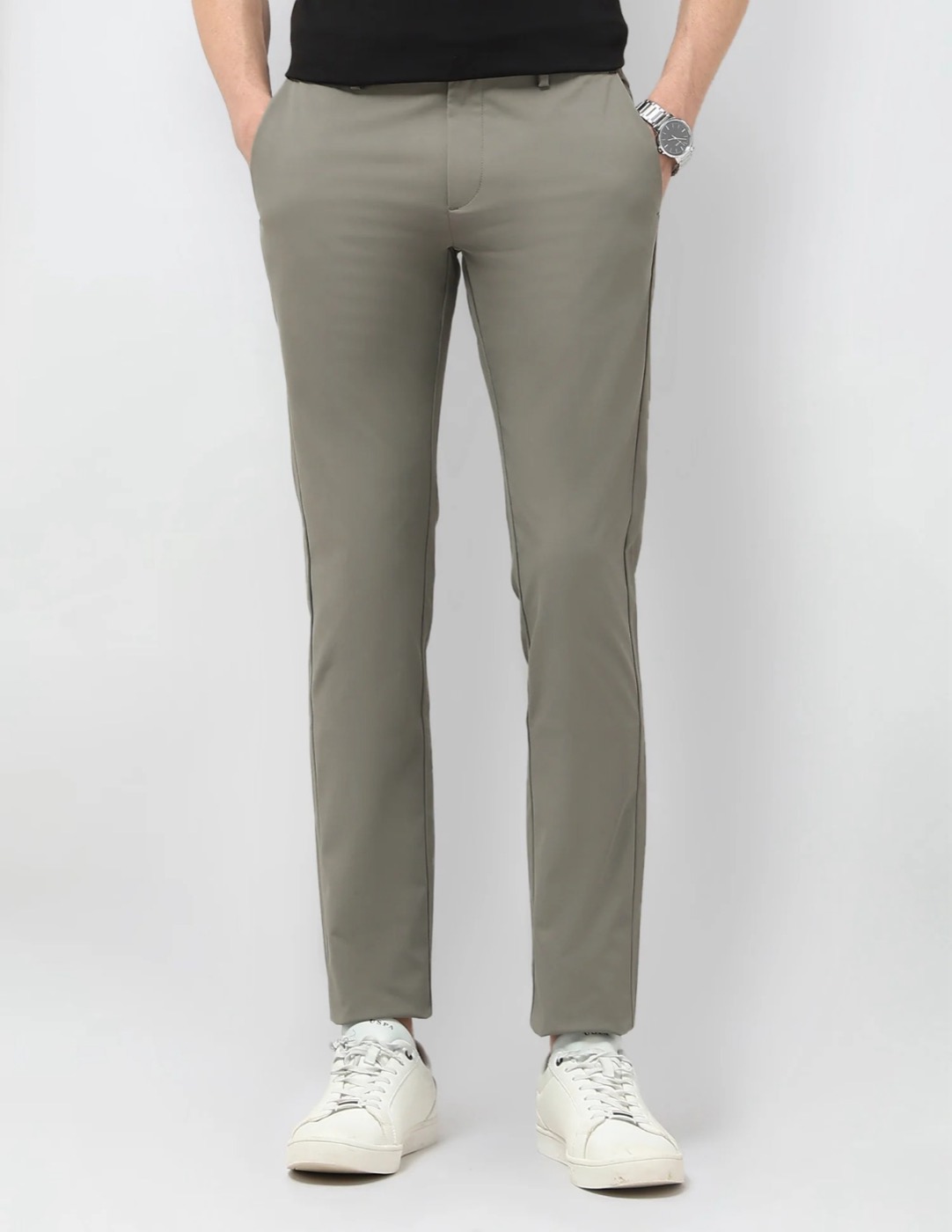
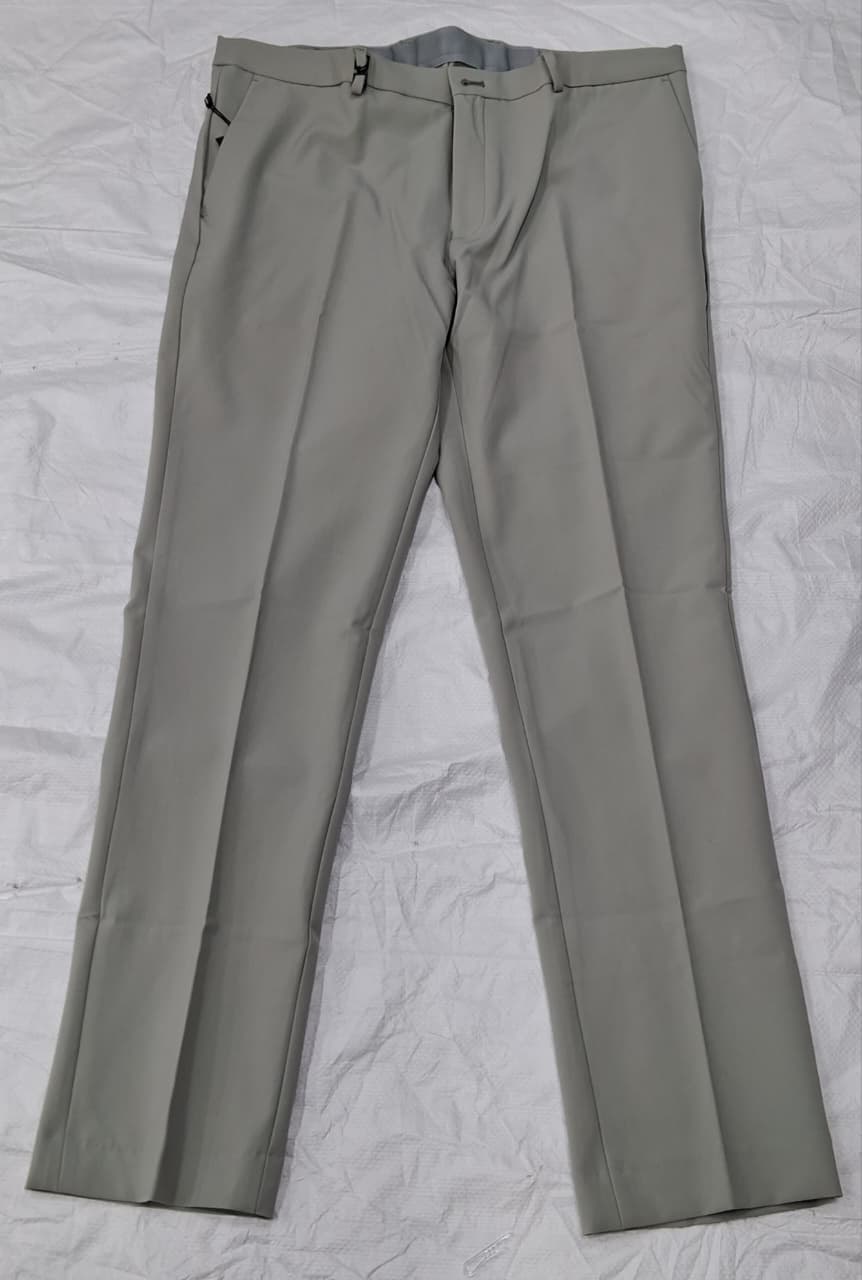
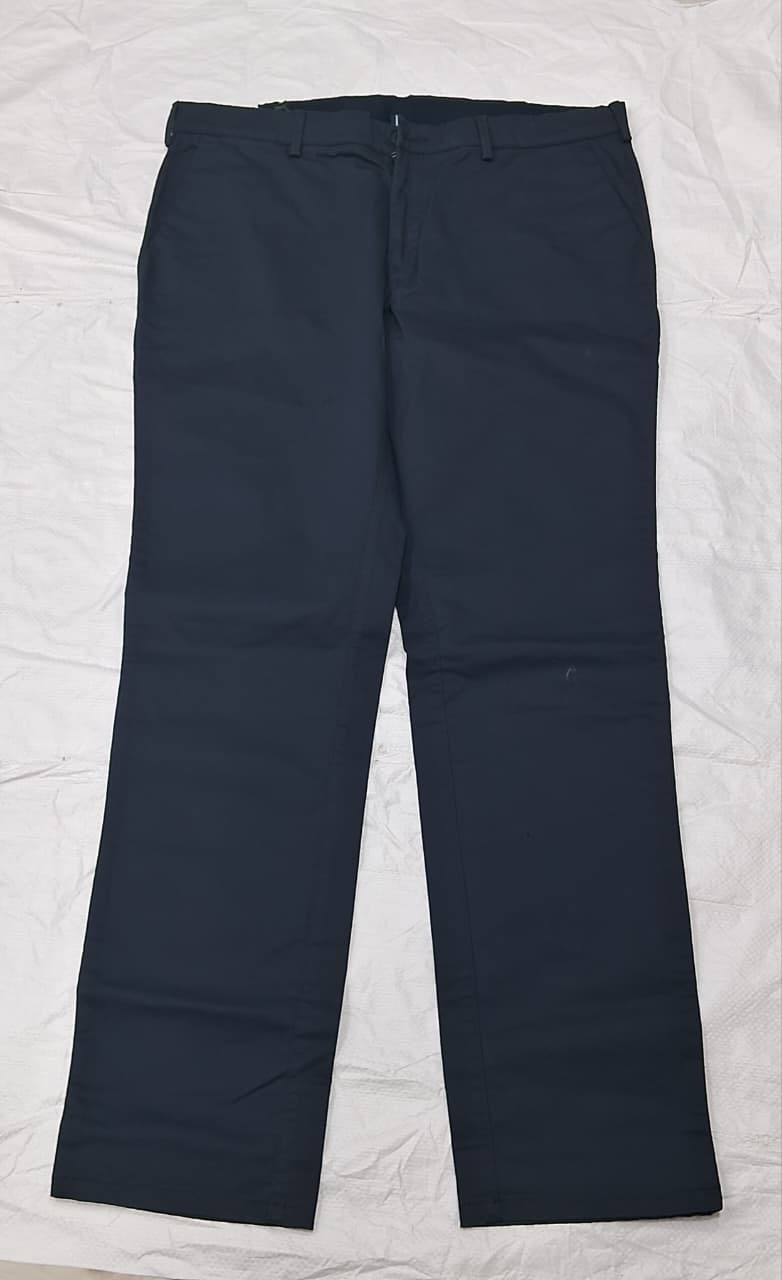
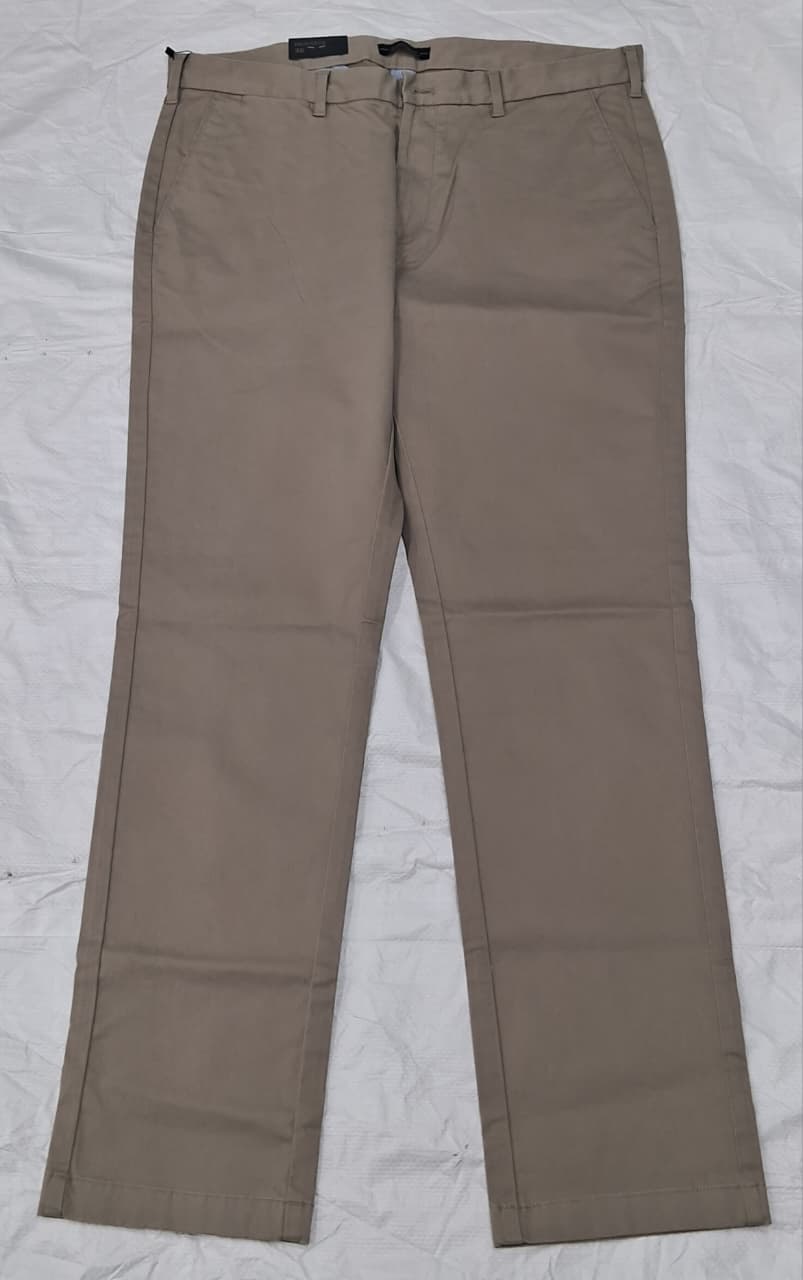
The waistband should sit level and secure without a belt doing the work. You should be able to slide two fingers inside it comfortably. If it digs in when you sit, it is too small; if it gapes at the back or folds over at the sides, it is too large.
Look for: a level band, no rolling, belt loops sitting evenly. Avoid: gaping at the back, pinching at the front.
Proportion 02
Rise
The rise is the distance from the crotch seam to the top of the waistband. It decides where the trouser sits — closer to the natural waist (higher rise) or nearer the hips (lower rise). A higher rise tends to lengthen the leg line and keeps tucked shirts in place; a lower rise feels more casual.
Look for: a rise that lets you sit without the waistband dropping or the seat pulling. Avoid: a crotch that hangs low or cuts in.
Proportion 03
Hip & seat
The seat should follow the curve of the body and drape cleanly beneath it. Too tight, and horizontal strain lines appear across the back while front pockets pull open. Too loose, and folds of fabric collect under the seat.
Look for: a smooth back, closed pockets. Avoid: horizontal “smile” lines or sagging fabric.
Proportion 04
Thigh room
The thigh is where slim fits most often fail. You should be able to pinch a little cloth on either side of the thigh while standing. When you sit, the fabric should not stretch taut.
Look for: ease when sitting and climbing stairs. Avoid: visible pulling or the outline of the leg pressing through.
Proportion 05
Knee proportions
The knee width connects the thigh to the hem and shapes the whole lower leg. A knee that is too narrow catches as you walk and creates bunching; one that is too wide makes the leg look shapeless.
Look for: fabric that skims past the knee as you move. Avoid: bagging at the knee after sitting.
Proportion 06
Leg shape
The path the outseam follows from hip to hem — tapering, straight or relaxed — defines the style of the trouser. A consistent, smooth line looks deliberate; an abrupt change looks like an alteration.
Look for: a continuous line with no sudden narrowing. Avoid: a leg that flares or twists.
Proportion 07
Trouser length
Length determines the “break” — the fold where the trouser meets the shoe. No break shows a little sock or ankle for a sharp, modern look; a slight break just touches the shoe; a full break rests on it with a soft fold. Most formal trousers look best somewhere between none and slight.
Look for: a single clean break or none. Avoid: fabric stacking in several folds at the ankle.
Proportion 08
Hem opening
The width of the trouser at the hem should suit the shoe: narrower openings pair with sleek shoes, wider openings with sturdier ones. The hem should sit evenly, slightly longer at the back than the front on a well-finished trouser.
Look for: an opening that frames the shoe. Avoid: an opening so wide it hides the shoe, or so narrow it grips the ankle.
Proportion 09
Overall silhouette
Step back from the mirror. Do waist, seat, thigh, knee and hem feel related? A trouser can be correct in every single measurement and still look unbalanced if the proportions fight each other. The best silhouettes are the ones that look effortless.
Look for: one continuous, intentional line. Avoid: a trouser that draws the eye to one point.